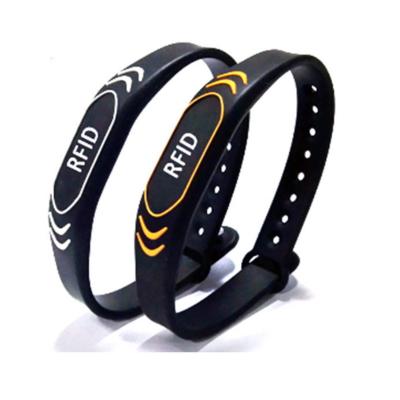
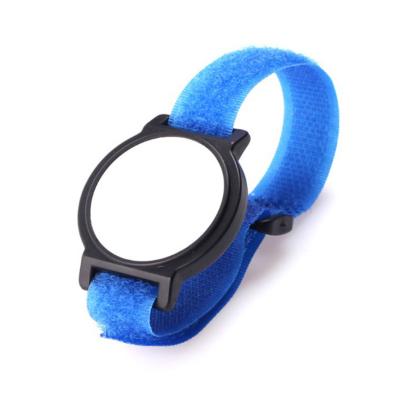
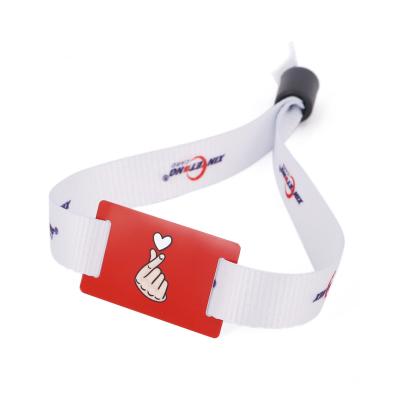
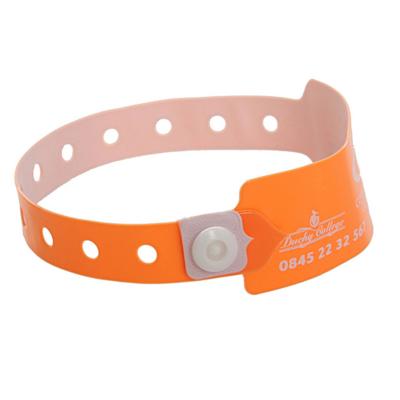
RFID is used in healthcare to connect physical items and records: equipment, supplies, specimens, medication stock, and patient identification points. The value comes from linking a reliable tag or wristband to a controlled data workflow, not from the tag alone.
Healthcare deployments require more planning than a standard commercial RFID project. Privacy, cleaning, material compatibility, user workflow, data access, and clinical validation all need to be reviewed before a hospital-wide rollout.
Request a healthcare RFID review | Send your workflow and compliance requirements
| Healthcare Workflow | Common RFID Format | What to Confirm |
| Patient identification point | Wristband or other approved patient-ID media | Material, closure, cleaning, read range, and local healthcare requirements |
| Equipment and asset tracking | Asset label, hard tag, or specialty tag | Surface material, cleaning agents, mounting method, and reader location |
| Medical stock and inventory | Label, tray tag, cabinet tag, or container tag | Item size, packaging, expiry data, storage conditions, and replenishment workflow |
| Specimen labeling | Approved specimen label or companion identifier | Print durability, moisture, cold storage, labeling sequence, and audit trail |
| Medication workflow support | Label or identifier used with a controlled process | Data-match rules, authorization, verification steps, and clinical oversight |
| Linen and reusable item tracking | Washable tag or embedded label | Temperature, chemicals, handling cycles, read environment, and tag life |
RFID validation can check that the scanned identifier matches the expected patient, specimen, item, or process step. It can create a time-stamped record and reduce manual transcription. It cannot decide whether a treatment is clinically appropriate or replace an approved clinical protocol.
For patient-facing workflows, keep clinical authority with the qualified professional. The RFID system should provide clear information, follow the agreed procedure, and support, not bypass, existing safety controls.
The data design should be agreed before tags are produced. In many deployments, the tag carries only an identifier while the protected healthcare system holds the detailed record.
DAFTags supplies RFID cards, labels, tags, wristbands, inlays, and custom identification products used in healthcare and other controlled environments. Options can include custom printing, encoding, numbering, barcode, wristband construction, and selected label materials.
The correct product depends on the workflow, reader environment, cleaning method, data design, and applicable healthcare rules. Send the application details before choosing a standard product from the catalogue.
No. RFID can provide data and support a controlled process, but it does not replace clinical judgment, approved protocols, or professional responsibility.
RFID can be used within approved identification workflows. The form factor, data rules, privacy controls, materials, and local healthcare requirements must be confirmed before deployment.
There is no single best frequency. HF, UHF, and other technologies have different read ranges and material behavior. The choice depends on the workflow, reader environment, and item type.
The safest design is often to store a controlled identifier on the tag and keep detailed records in the secure healthcare system. Data requirements must follow local privacy and security rules.
Test the tag or wristband, reader position, cleaning process, read rate, user workflow, exception handling, data access, and audit record together.
Send the workflow, target item, reader environment, cleaning method, data rules, required quantity, and destination market so the compatible product and project questions can be reviewed.
Send the workflow, item type, reader model, operating environment, required data, privacy requirements, and project volume. The supplier can then confirm the suitable RFID format and the next step for testing.
Request a healthcare RFID review | Share your workflow and compliance requirements


 Tel : +86 15814022871
 Email : sales@daftag.com